
Bleeding or Swollen Gums Around an Implant Crown in Westerly, RI: Causes and When to See a Dentist
Healthy tissue around an implant crown generally should not repeatedly bleed or remain swollen. Swollen gums around an implant, or bleeding around a dental implant that keeps happening, often comes from plaque buildup and tissue inflammation, but the shape, fit, position, or condition of the dental implant restorations in Westerly, RI, itself can also play a role. Persistent symptoms are worth having evaluated, since a dentist needs to determine whether the issue involves the crown, the surrounding tissue, the implant underneath, or some combination of all three.
Is It Normal for Gums to Bleed Around a Dental Implant Crown?
Occasional temporary irritation can happen, but repeated bleeding during brushing, flossing, or cleaning around an implant crown should not simply be considered normal. Healthy peri-implant tissue generally tolerates daily cleaning without bleeding. When bleeding around an implant crown keeps happening, it usually signals some level of tissue inflammation from plaque accumulation or another ongoing irritant.
What Healthy Gum Tissue Around an Implant Should Look Like
Healthy tissue around an implant crown is generally firm, without persistent swelling, and comfortable to clean. It shouldn’t bleed spontaneously during normal brushing or flossing. Every patient’s tissue looks a little different, so this is a general guide rather than an exact standard every healthy implant will match precisely.
Occasional Irritation vs Persistent Bleeding
A single episode of irritation, like a bit of bleeding after flossing more aggressively than usual, isn’t the same as bleeding that returns every time you clean the area. One-time irritation usually resolves on its own. Bleeding that keeps coming back, or gum inflammation around the implant crown that doesn’t settle down, is worth having a dentist take a look at.
Why Can Gums Become Swollen Around an Implant Crown?
Several factors can contribute to swelling and inflammation, and it’s often more than one thing at once.
Plaque and Biofilm Around the Implant Restoration
Biofilm around a dental implant works much the same way plaque does around a natural tooth. When it accumulates around crown margins, in peri-implant tissue, or in hard-to-reach spots near adjacent teeth, the body responds with redness, swelling, and bleeding. Regular, effective implant crown cleaning is the main way to keep this from building up.
An Implant Crown That Is Difficult to Clean Around
Sometimes the shape of the restoration itself makes cleaning harder than it should be. A crown that limits floss access, makes interdental cleaning awkward, or emerges from the gum tissue in a way that traps plaque can be part of the problem. Even with a reasonably good home care routine, these shape-related issues can quietly contribute to inflamed gums around the implant.
Food Trapping Around the Implant Crown
Food impaction near an implant crown often comes down to open or weak contact areas with the neighboring tooth, or crown contours that don’t shed food the way a natural tooth does. When food repeatedly gets stuck in the same spot, the surrounding tissue can become irritated over time.
Changes in the Surrounding Gum Tissue
Gum tissue around an implant can change over the years, through gradual recession or tissue remodeling. As the restoration ages, these tissue changes can sometimes make an area that used to be easy to clean harder to keep plaque-free. Not every tissue change around an implant points to a failing crown. It’s simply one more factor worth checking during an evaluation.
How Implant Crown Shape and Contour Can Affect Gum Health
This is one of the more overlooked pieces of the puzzle, and it’s specific to how the restoration itself is built.
What Is the Emergence Profile of an Implant Crown?
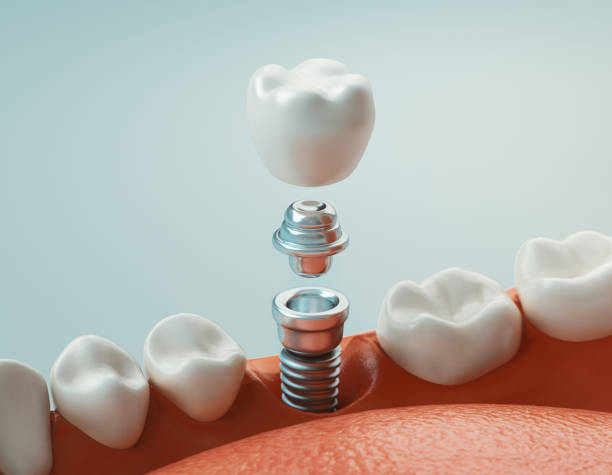
As an implant crown transitions from the implant and abutment area up through the gum tissue into a tooth-like shape, that transition is called the implant crown emergence profile. This dental implant emergence profile affects how well the tissue is supported, how easy the area is to clean, and how much plaque or food tends to collect near the gumline.
Why an Overcontoured Implant Crown Can Be Harder to Clean
A crown with a bulky or overcontoured implant crown shape can create tight spots that are genuinely difficult to keep clean, even for a patient who brushes and flosses consistently. This doesn’t mean every case of swollen gums points to a poorly designed crown. Contour is simply one of several factors a dentist checks during an evaluation.
Contact Points With Neighboring Teeth Matter Too
The proximal contact between an implant crown and the adjacent tooth affects how food moves through that area while chewing. A contact point that’s too tight, too loose, or positioned awkwardly can lead to repeated food impaction and ongoing tissue irritation in the interdental space nearby.
What Is Peri-Implant Mucositis?
Peri-implant mucositis describes inflammation affecting the soft tissue surrounding an implant, without the deeper bone changes involved in a more advanced condition called peri-implantitis. Common signs include redness, swelling, tenderness, and bleeding during brushing or a professional cleaning. According to the American Academy of Periodontology, peri-implant mucositis involves inflammation limited to the soft tissue around the implant, with no signs of bone loss.
How Plaque Contributes to Peri-Implant Mucositis
Much like gum disease around natural teeth, peri-implant mucositis is driven primarily by plaque accumulation near the implant restoration. The bacteria in that plaque trigger an inflammatory response in the surrounding tissue.
Why Early Evaluation Matters
Catching and addressing the underlying cause early gives the tissue a better chance to settle down. An early evaluation also lets the dentist figure out whether hygiene habits, the crown’s design, or another factor needs attention, rather than letting inflammation continue unaddressed.
Peri-Implant Mucositis vs Peri-Implantitis: What’s the Difference?
Peri-implant mucositis is a soft-tissue inflammatory condition without associated loss of the bone supporting the implant. Peri-implantitis involves inflammation of the peri-implant tissues along with progressive loss of that supporting bone. The AAP’s patient resource on peri-implant diseases notes that peri-implantitis, unlike mucositis, involves deterioration of the bone structure supporting the implant, and usually requires more involved treatment. This distinction can’t be made from symptoms alone.
Bleeding Alone Cannot Tell You How Serious the Problem Is
Bleeding is a useful sign that something needs attention, but it doesn’t by itself indicate whether bone involvement is present. A clinical examination, and sometimes imaging, is needed to tell the difference between the two conditions.
When Deeper Implant Problems Require Additional Care
If an evaluation suggests a condition involving bone loss or another issue beyond what restorative dentistry addresses, a referral for periodontal or surgical care may be the appropriate next step. Wells Street Dental can evaluate the implant restoration, crown contour, bite, hygiene access, and surrounding tissues, and determine whether restorative treatment or referral for additional care makes sense.
Can an Implant Crown Cause Gum Inflammation?
It can contribute in some situations, but crown-related factors are only one possible cause among several. Potential restorative contributors include crown contour, hygiene access, food trapping, the restorative margin or connection, residual cement or material left from the restoration process, altered contact points, restoration movement, and bite-related problems.
Poor Cleansability Around the Crown
When the geometry of a crown makes certain areas genuinely difficult to reach with a toothbrush or floss, plaque tends to build up in those same spots repeatedly, which can lead to ongoing inflammation nearby.
Food Trapping Between the Implant Crown and Natural Tooth
A weak or open contact relationship between the implant crown and the tooth next to it can allow food to lodge there repeatedly, which irritates the tissue and makes plaque control more difficult over time.
Problems With the Crown or Restorative Connection
Crown movement, a loosening restorative component, or a chipped or damaged implant crown can all change how the restoration sits against the tissue. Any of these can sometimes contribute to irritation. If you’re also noticing looseness, that’s worth mentioning at your evaluation, since it may point to a separate underlying issue with the screw or abutment connection.
What If the Implant Crown Is Also Loose?
Bleeding or swelling combined with crown movement is a good reason to schedule a prompt restorative evaluation. A loose implant crown can allow plaque to accumulate more easily around the moving restoration, and the movement itself can irritate the surrounding tissue. A loose crown and inflamed gums often need to be evaluated together rather than treated as two separate problems.
Can Food Getting Stuck Around an Implant Crown Make the Gums Bleed?
Yes, repeated food impaction can irritate surrounding tissue and make plaque control more difficult. Contact points, crown contour, gum recession, and the position of neighboring teeth all play a role in how often food gets trapped and how much it affects your ability to keep the area clean with regular flossing. Avoid repeatedly forcing sharp objects like toothpicks into the area, since this can injure the tissue further rather than solve the underlying problem.
Why Cleaning Around an Implant Crown Is Different From Ignoring It Because It “Can’t Get a Cavity”
The implant crown itself doesn’t decay the way natural tooth enamel does, but that doesn’t mean the area around it is maintenance-free.
Plaque Can Still Accumulate Around an Implant Crown
Plaque forms on an implant crown’s surface just as it does on natural teeth. Even though the crown material itself won’t develop a cavity, the plaque sitting against the gum tissue can still cause inflammation.
The Gum and Bone Around the Implant Still Matter
The tissue and bone supporting the implant are biologically active and can respond to plaque and inflammation just like the tissue around a natural tooth. Skipping cleaning around an implant because “it can’t get a cavity” overlooks this.
Neighboring Natural Teeth Still Need Cavity Prevention
Teeth next to an implant crown are still susceptible to decay in the usual way. Regular cleaning around the implant also protects those neighboring teeth from the plaque that tends to collect in the same general area.
How Should You Clean Around a Dental Implant Crown?
Good implant crown cleaning habits look similar to natural tooth care, with a bit more attention paid to the areas a standard routine might miss.
Brush the Gumline Around the Implant Restoration
Angling the brush gently toward the gumline helps disrupt plaque before it has a chance to build up and irritate the tissue.
Clean Between the Implant Crown and Neighboring Teeth
Floss or another interdental cleaning aid designed for implants can help reach the contact areas between the crown and the adjacent tooth, where food and plaque are most likely to collect.
Ask Your Dental Team Which Interdental Tool Fits Your Restoration
Not every implant crown has the same contour or spacing, so no single interdental tool works best for every restoration. Your dental team can recommend a specific tool, like a particular type of brush or floss threader, based on how your crown is shaped.
Professional Cleaning Still Matters With Dental Implants
Regular preventive dental care in Westerly plays an important role in catching early signs of inflammation before they become bigger problems. For some patients, Guided Biofilm Therapy can offer a more thorough, gentle cleaning experience around implant restorations. It’s one part of a broader preventive routine rather than a stand-alone treatment for peri-implant disease.
When Should Swelling or Bleeding Around an Implant Crown Be Evaluated?
Several signs point toward the need for a timely evaluation rather than waiting to see if things improve on their own.
Bleeding That Keeps Returning
Bleeding that shows up every time you brush or floss, rather than as a one-time occurrence, is a sign worth having checked.
Redness, Swelling, or Increasing Discomfort
Ongoing redness, swelling, or tenderness that seems to be getting worse rather than better deserves a closer look, especially if you notice pain when chewing near the implant crown.
Pus, Drainage, or a Persistent Bad Taste
Discharge, pus, or a lingering bad taste or odor near the implant crown are signs that warrant timely professional evaluation.
Increasing Food Trapping or Visible Changes
If food is getting caught around the crown more often than it used to, or you notice gum recession or any visible change in how the restoration sits against the tissue, it’s worth having these changes checked rather than waiting to see if they settle on their own.
Implant Crown Movement
Any sense that the crown itself is moving is worth mentioning right away. This kind of implant crown movement and stability issue often needs a restorative evaluation alongside an assessment of the surrounding tissue.
How a Dentist Evaluates Bleeding or Swelling Around an Implant Crown
A thorough evaluation typically follows a clear, step-by-step sequence.
Examine the Gum Tissue Around the Restoration
The dentist looks at the color, firmness, and bleeding response of the tissue surrounding the implant crown.
Check the Implant Crown’s Shape, Fit, and Stability
The crown’s contour, how it emerges from the gum tissue, and whether it’s still securely in place are all part of a complete restorative check.
Evaluate Contacts and Food Trapping
The dentist checks the contact points with neighboring teeth to see whether food impaction could be contributing to the irritation.
Check the Bite and Occlusion
Excessive or uneven biting forces on the restoration can factor into ongoing tissue stress, so the bite gets evaluated as part of the visit.
Evaluate the Supporting Implant and Bone When Needed
When clinically appropriate, imaging may be used to check the health of the bone supporting the implant, particularly if the findings suggest something beyond simple soft-tissue inflammation.
Does the Implant Crown Need to Be Replaced if the Gums Are Inflamed?
Not necessarily. The underlying cause determines the right treatment path. Depending on what the evaluation reveals, a dentist might recommend improved hygiene techniques, professional cleaning, a restorative adjustment, or correcting a problematic contact point. In other cases, the right path is a repair, a crown replacement, or a referral for treatment of a more advanced underlying condition. Replacement isn’t the default outcome. Many cases of gum inflammation around an implant crown are addressed with restorative dentistry adjustments or improved hygiene access rather than starting over with a new crown.
Can an Older Implant Crown Start Causing Gum Problems Years Later?
Yes, this can happen even when a restoration seemed to be doing fine for years. Tissue can change gradually over time, restorations can wear, contact points can shift, and hygiene habits sometimes drift. As the surrounding tissue changes, an older implant restoration’s original contour can become a less natural fit for it, which can make an area that used to be simple to clean more prone to plaque buildup and irritation.
Frequently Asked Questions About Bleeding Gums Around Implant Crowns
Is bleeding around a dental implant normal?
Occasional, one-time irritation can happen, but bleeding that keeps returning during regular brushing or flossing isn’t something to consider normal. It’s worth having evaluated.
Why is the gum around my implant crown swollen?
Swelling is often related to plaque buildup, a crown shape that’s hard to clean around, food trapping, or changes in the surrounding tissue over time. A dentist can help pinpoint the specific cause.
Can plaque build up around a dental implant?
Yes. Plaque forms around implant crowns much the same way it does around natural teeth, and it’s the main driver of inflammation in the surrounding tissue.
Can an implant crown cause gum irritation?
It can contribute in some cases, particularly if the crown’s contour, contact points, or fit make the area difficult to clean. It’s usually one factor among several rather than the sole cause.
Does bleeding mean my dental implant is failing?
Not necessarily. Bleeding is a sign of tissue inflammation, which is often treatable, especially when caught early. A full evaluation is the only way to understand what’s actually happening.
Can peri-implant mucositis be treated?
In many cases, yes, particularly with improved hygiene and professional care. A dentist can offer more specific guidance based on a full assessment of your situation.
Should I floss around an implant crown?
Yes, cleaning between the implant crown and neighboring teeth is an important part of preventing plaque buildup. Your dental team can recommend the best tool for your specific restoration.
Can food trapped around an implant crown cause inflammation?
Yes. Repeated food impaction can irritate the tissue and make it harder to keep the area free of plaque, which can contribute to ongoing inflammation.
Will my implant crown need replacement if my gums bleed?
Usually not. Most cases are addressed through improved hygiene, professional cleaning, or a restorative adjustment rather than a full crown replacement.
Have an Irritated Implant Crown Evaluated in Westerly, RI
Patients experiencing recurring bleeding, swelling, food trapping, or discomfort around an existing implant crown can have your implant crown evaluated at Wells Street Dental in Westerly, RI. Our team assesses the restoration, the surrounding tissue, and your bite to determine the right next step, whether that’s a hygiene adjustment, a restorative fix, or a referral for additional care.
